
Do you have root canal treatment coming up? Many people become stressed about this procedure because they think it will be painful. The good news is that you don’t have anything to worry about. With modern techniques and anesthetics, you shouldn’t feel any pain at all! However, something many people don’t know is that there are two different types of root canals: surgical and non-surgical. Continue reading to learn more about the two different types so you know exactly what to expect.
What Is the Purpose of Root Canal Treatment?
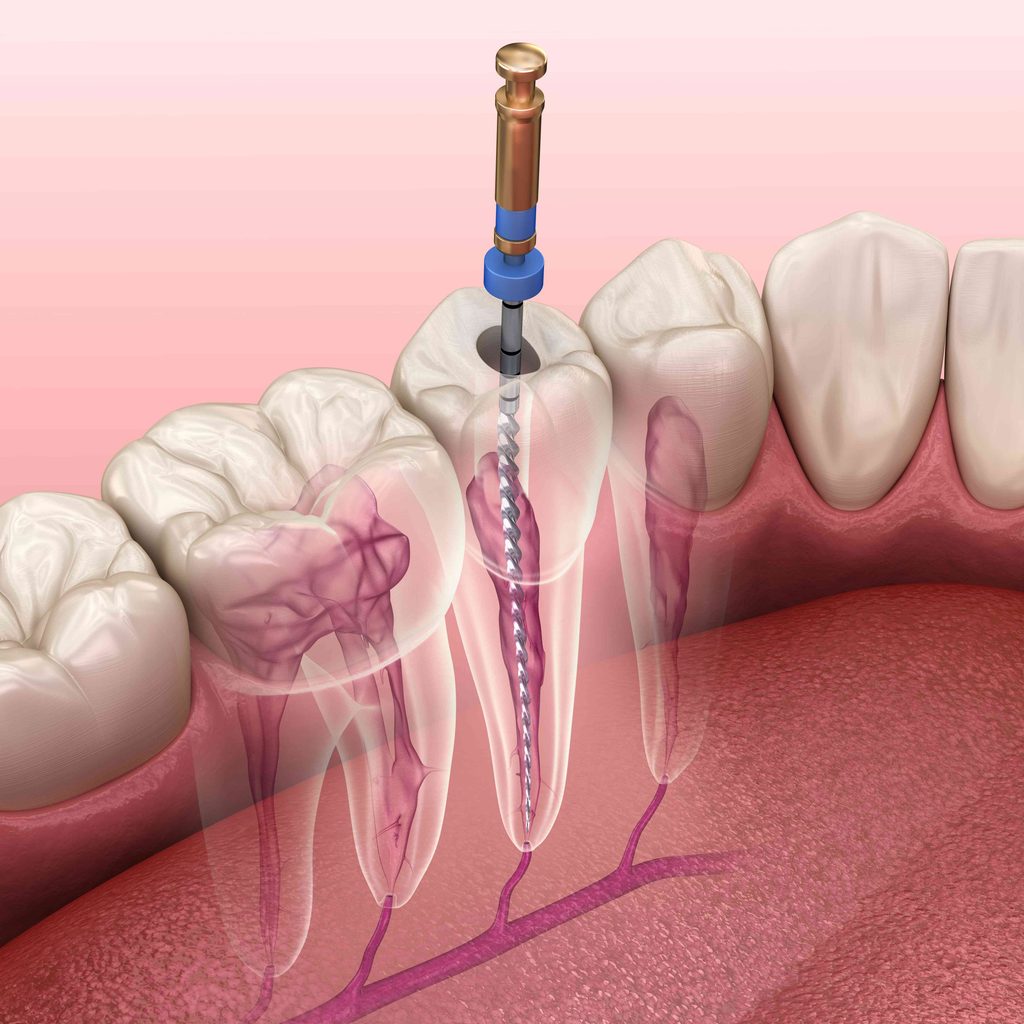
When a tooth is severely damaged, root canal therapy has the potential to restore the tooth and prevent the need for a tooth extraction. This procedure involves your dentist making an opening in the tooth, removing the pulp, sterilizing the interior of the tooth, filling the tooth, and sealing the tooth with a dental crown. This treatment is recommended when the damage is too severe to be corrected with a dental filling but can still be saved from an extraction.
Non-Surgical vs. Surgical Root Canal Treatment
Non-Surgical Root Canal Treatment
A non-surgical root canal is similar to a dental filling, but deeper. First, your dentist makes an opening in the top of the tooth to reach the interior pulp of the tooth and the root canals. Then, the pulp is removed from within the tooth and the root canals. These portions of the teeth are cleaned and sterilized before being filled and sealed with a dental crown. This method restores the interior of the tooth while strengthening the exterior structure.
Surgical Root Canal Treatment
Surgical root canals have the same purpose as non-surgical root canals in that they involve removing the infected pulp and sterilizing the interior of the tooth before filling and sealing it. However, surgical root canals also require that an incision is made in the gum tissue to access the exterior portion of the tooth’s roots. This way, your dentist is better able to avoid damaging any existing restorations. Surgical root canals access the root from the side so infected tissues can be addressed. The end of that root canal can then be sealed with filling material or bone grafting depending on your individual means.
During your consultation with us, we will examine your smile to determine when method will best suit your needs!
About the Author
Dr. Peyman Vaziri earned his dental doctorate at Case Western Reserve University, earning an Advanced Education in General Dentistry and a specialty in endodontics. Since then, he has performed more than 12,000 root canals. Currently, he is a proud member of the American Dental Association, Ohio Dental Association, and American Association of Endodontists. To learn more about root canal treatment or to schedule an appointment, call (440) 243-7221.